What a Garage Door Inspection Reveals That a Visual Check Alone Cannot
June 23, 2026
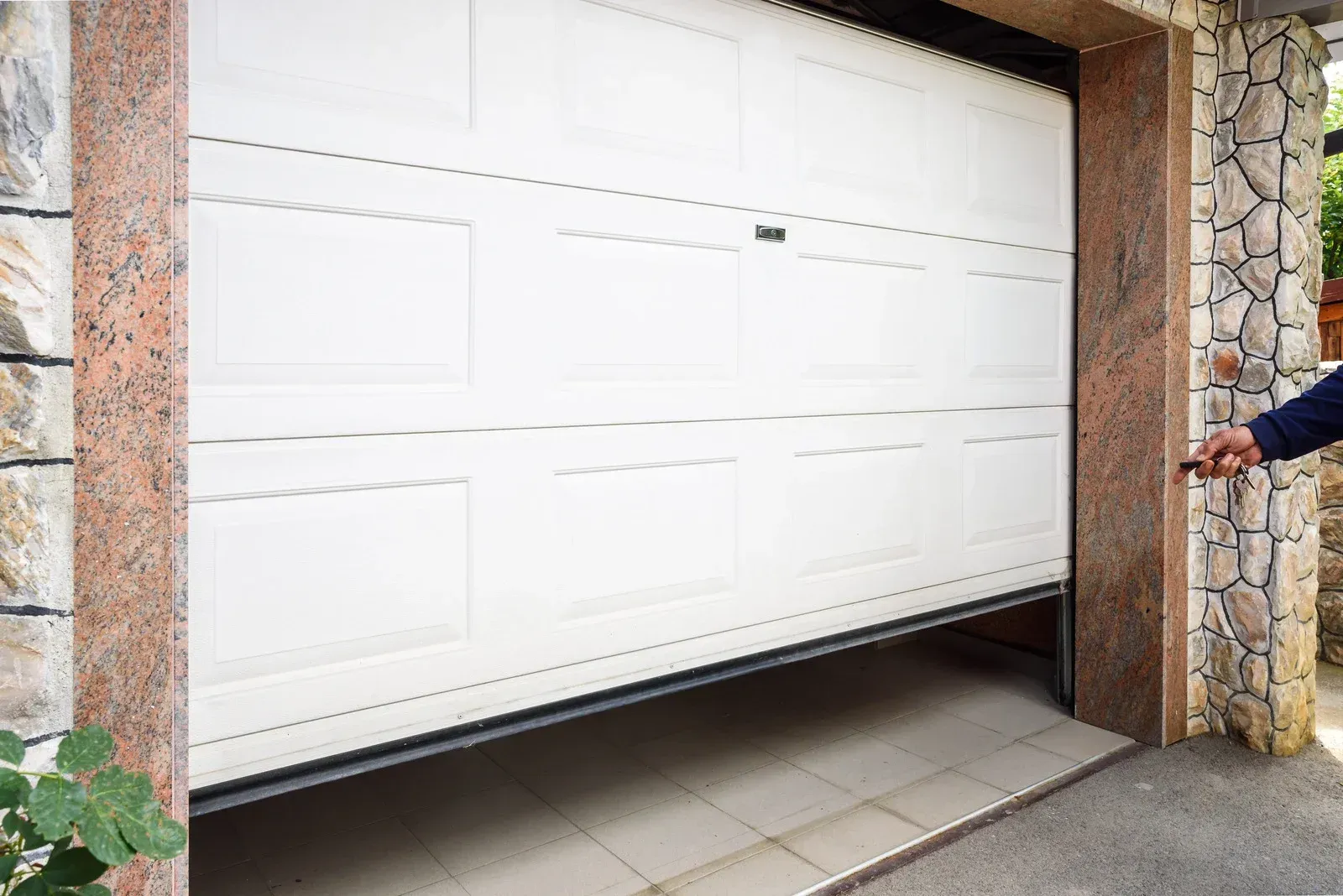
You give your garage door a quick once-over before leaving for work. The panels look fine. The door opens. Nothing seems wrong. Three weeks later, a spring snaps at 6 a.m., the door drops, and you are looking at an emergency service call that could have been avoided entirely. That gap between what looks fine and what actually is fine is exactly what a professional garage door inspection is designed to close.
A visual check tells you the surface condition. It cannot tell you how much tension remains in a torsion spring that is 80 percent through its cycle life, whether your cable drums are developing an oval wear pattern, or whether your opener's force settings have drifted far enough to crush an object in the door's path without triggering the auto-reverse. These are the findings that matter most, and none of them announce themselves to the untrained eye.
What You Can See Versus What Actually Matters
Most homeowners inspect what is easy to see: surface rust on panels, a dented section, a worn weatherseal along the bottom. These are real issues worth addressing, but they rarely cause catastrophic failure. The components that fail suddenly and dangerously sit behind the surface.
Torsion springs are the clearest example. A spring under full working tension looks identical to a spring that has 200 cycles remaining before failure. The only way to assess remaining life is to measure the coil gap, count the active coils, compare the wire diameter against manufacturer spec, and cross-reference the spring's installed date against its rated cycle count. Springs on residential doors are typically rated at 10,000 cycles, which translates to roughly 7 to 14 years depending on how often the door runs. In the Piedmont Triad region, where temperature swings between January lows near 28°F and July highs above 90°F cause metal to expand and contract repeatedly, spring fatigue accelerates measurably compared to climates with narrower seasonal ranges.
Cable wear is equally invisible without getting close. A cable can fray internally at the drum wrap point while showing no exterior fraying at all. By the time you see a loose strand, the structural integrity is already compromised. We find frayed cables on roughly 1 in 4 doors that come in for a routine inspection with no reported symptoms.
Roller wear follows the same pattern. A nylon roller that looks intact may have developed a wobble in its stem bearing that adds lateral stress to the track with every cycle. That stress transfers to the track brackets, loosening the lag screws that hold them to the wall framing. On brick or block construction, which appears frequently in older Mocksville area homes, that bracket pull-out risk is higher because anchor holding strength depends entirely on the masonry anchor type used during original installation.
What a Professional Inspection Actually Covers
A professional inspection is a structured mechanical evaluation, not a walkthrough. Here is the sequence we follow on every inspection call.
Springs and cable system: We measure torsion spring wire diameter, coil count, inside diameter, and installed date if documented. We check extension spring condition on doors using that system, inspect the safety cables threaded through each extension spring, and assess cable drum groove wear.
Rollers, hinges, and track alignment: We check roller stem play, nylon wheel condition, hinge pin wear, and track plumb alignment. Track misalignment of more than a quarter inch from plumb creates uneven load distribution that shortens roller and hinge life by 30 to 40 percent.
Opener force and limit settings: We use a force gauge to test both the closing force and the auto-reverse sensitivity. UL 325 requires residential openers to reverse when they encounter 20 pounds of resistance on the closing cycle. Openers drift out of this spec as they age, and an out-of-spec opener is a safety hazard that no visual check will catch.
Balance test: We disconnect the opener, lift the door by hand to waist height, and release it. A properly balanced door holds at mid-travel. A door that drops or rises sharply has spring tension out of range, which forces the opener motor to compensate and shortens its service life.
Weatherseal and threshold condition: Bottom seals, top seals, and side seals affect both energy efficiency and moisture intrusion. In Mocksville and surrounding Davie County areas, summer humidity regularly reaches 85 to 90 percent, and a failed threshold seal allows that moisture into the garage, accelerating corrosion on steel components and encouraging wood rot on framed walls adjacent to the opening.
Diagnostic Overview: What Symptoms Indicate
| What You're Seeing | Most Likely Cause | Severity | First Step |
|---|---|---|---|
| Door drops at mid-travel when disconnected | Spring tension out of balance | High | Schedule spring adjustment, do not operate manually |
| Grinding noise during operation | Worn roller bearings or dry track | Medium | Lubricate track and rollers, inspect roller stems |
| Door reverses before reaching the floor | Limit switch or close-force setting off | Medium | Adjust opener limit settings per manufacturer spec |
| One side of door lower than the other | Broken or stretched cable on one side | High | Stop operating door immediately, call for service |
| Opener strains visibly on the way up | Spring tension low or spring near end of life | High | Inspect spring coil gap and remaining cycle life |
| Loud bang from ceiling area | Torsion spring failure | High | Do not attempt to open door, call immediately |
| Door moves slowly in cold weather | Grease thickened or seal frozen to floor | Low | Apply low-temperature lubricant, check seal gap |
| Hinge area visible cracks | Metal fatigue on hinge plates | Medium | Replace affected hinges before they separate fully |
Why Visual Inspections Miss the Most Dangerous Failures
WARNING: A broken torsion spring stores and releases extreme mechanical energy. If you hear a loud bang from the ceiling of your garage and your door suddenly feels very heavy or will not open, do not attempt to force it manually or remove any spring components. A single torsion spring on a standard residential door holds between 150 and 300 foot-pounds of torque. Mishandling a broken or fully wound spring without proper winding bars and safety training causes serious injury.
TIP: Before calling for service after a suspected spring failure, pull your emergency release cord to disengage the door from the opener, then try lifting the door by hand from the bottom center. If it is extremely heavy and will not move past 12 inches, you have strong confirmation of a spring issue and can communicate that clearly when you call, which speeds up the diagnostic step and parts preparation.
Prevention: What Keeps an Inspection from Becoming a Repair Call
A well-maintained door in this region needs attention at three intervals.
Every 6 months: Lubricate all rollers, hinges, and the torsion spring coils with a spray lubricant rated for metal-to-metal contact. Never use WD-40 on springs or rollers. It displaces existing grease and accelerates wear. Test the auto-reverse by placing a 2x4 flat on the floor in the door's path and running a close cycle.
Annually: Check all track bracket mounting screws and tighten any that show movement. Inspect weatherseals for cracking or compression loss. Wipe down the photo-eye sensors and verify they trigger correctly. In the Piedmont Triad, late summer humidity can fog sensor lenses enough to cause intermittent reversal behavior.
Every 3 to 5 years: Schedule a full professional inspection covering spring cycle count, opener force calibration, roller bearing condition, and cable drum inspection. This interval catches the components that degrade slowly and invisibly before they cause an unscheduled failure.
Skilled Technicians at Garage Door South Serving Mocksville Area
A visual check tells you your door is working. A professional inspection tells you for how long. In Mocksville and the Piedmont Triad, North Carolina, the combination of wide seasonal temperature swings, high summer humidity, and the age of the regional housing stock means hidden spring and cable wear develops faster than the national average suggests. With 35
or more years of field experience in this market, Garage Door South
provides complete
garage door inspections, spring and cable service, opener calibration, and full installation across the region.
Frequently Asked Questions
How long does a professional garage door inspection take, and what does it cover?
A thorough inspection typically takes 30 to 45 minutes on a standard single or double residential door. It covers spring tension and remaining cycle life, cable and drum condition, roller and hinge wear, track alignment, opener force calibration, auto-reverse testing, and weatherseal condition. A report of findings should accompany every inspection.
Can I do my own garage door inspection, or does it require a professional?
You can safely perform the balance test and auto-reverse test yourself. The balance test requires only disconnecting the opener and observing whether the door holds at mid-travel. Spring measurement, cable drum inspection, and opener force calibration require tools and training that are beyond a safe DIY scope for most homeowners.
How do I know if my garage door spring needs replacement before it breaks?
Check the coil gap along the spring body. A torsion spring in good condition has tight, uniform coil spacing. Visible gaps between coils, rust along the coil surface, or a door that requires noticeably more force to lift manually are all indicators that replacement is approaching. Springs rarely give more warning than that.
Does the humid climate in the Piedmont Triad affect how often I need a garage door inspection?
Yes. Humidity above 80 percent accelerates corrosion on spring wire, cable strands, and roller stems. In the Mocksville area, we see spring wear rates roughly 15 to 20 percent higher than drier inland regions. Annual lubrication and a professional inspection every 3 years rather than 5 is the more appropriate interval for this climate.
Is it safe to use my garage door if the opener is struggling but the door still moves?
No. An opener that strains during operation is compensating for a mechanical problem elsewhere, most often spring tension loss or roller drag. Continuing to operate the door in that condition accelerates opener motor wear and can cause a mid-cycle failure where the door stops in an open or partially open position.